Carried · The Cape, South Africa
A prisoner on Robben Island. A Qur’an in a Cape Town masjid.
The Dutch East India Company held a nobleman from Tidore on Robben Island, twice. The Cape Muslim community remembers him as Tuan Guru, the Master Teacher, and still remembers what he passed on.
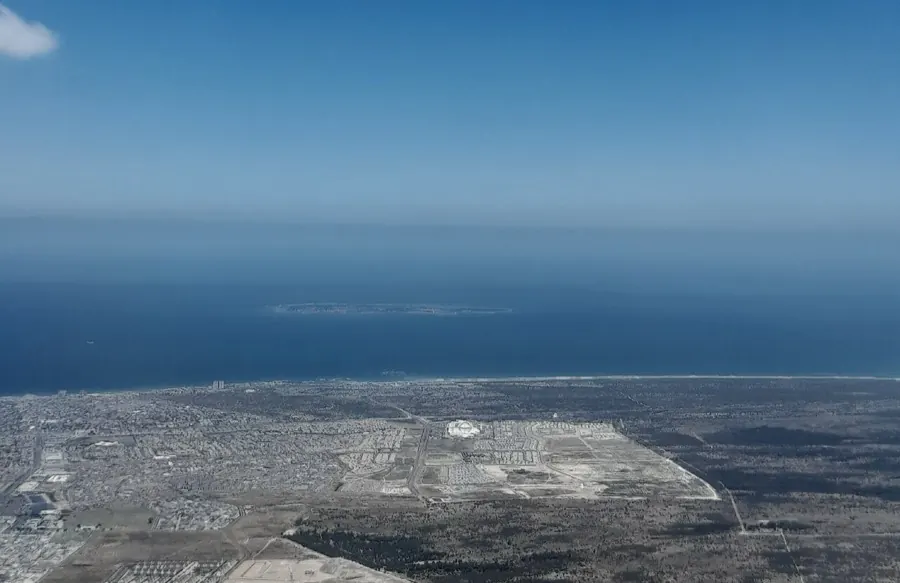

From Tidore to the Cape
His name was ʿAbdullāh ibn Qāḍī ʿAbd al-Salām. He came from Tidore, in the Moluccas, in today’s Indonesia. In his will, made in 1801, he described himself as “a former Prince of the domain of Tidore in Ternate.”
In 1780 he was one of four men from Tidore sentenced in Batavia and sent to the Cape by the Dutch East India Company, after the Sultan of Tidore was suspected of dealing with the English. He came as a state prisoner. Some later accounts call him a slave; the records do not.
He was not the first Muslim at the Cape. Muslims had been there since the second half of the seventeenth century, among them exiles such as Shaykh Yusuf, who arrived in 1694.
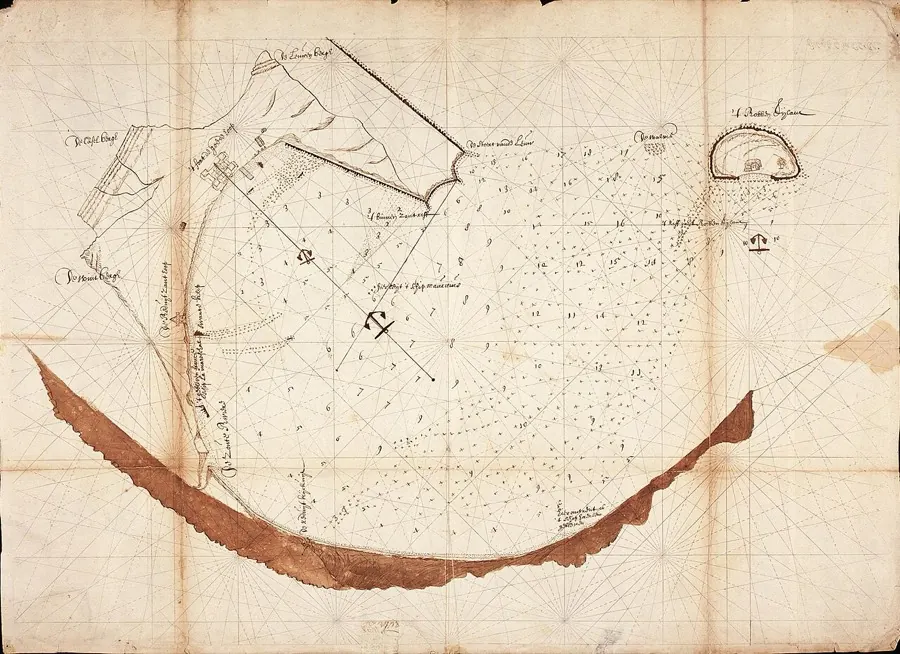

Two terms on the island
Dutch records place him on Robben Island twice: 1780–81 and 1786–91. The four men were landed on the island in mid-April 1780. By early February 1781 the prisoners had been moved to the mainland, because English ships were threatening the island. He was sent back in late 1786, and in July 1791 he was able to return to the town.
That is about five and a half years in all. You may read elsewhere that he spent twelve years on the island. The records do not support it.
The muṣḥaf
The community remembers that he wrote out the Qur’an from memory. A handwritten muṣḥaf credited to him is kept at the Auwal Masjid in Bo-Kaap, Cape Town.
That is community tradition, and we tell it as tradition. We know of no published study of the manuscript itself that confirms it was written from memory. Historians also differ on where he wrote it. The popular story places it on Robben Island. The historian Michael Laffan, who has worked closely with the Dutch archives, writes that it is “said to have [been] written on the island,” and thinks it more likely that he wrote it in town, between his two terms.
According to a 2023 BBC report, builders found the muṣḥaf in the mosque’s attic in the mid-1980s, and Maulana Taha Karaan and local scholars spent three years arranging and binding its loose pages. In 2019 a member of South Africa’s Parliament took his oath of office on a replica of it.
A handbook of belief and practice also survives, held by his descendants: Maʿrifat al-Islām wa-l-Īmān, 613 pages in Arabic and in Malay written in Arabic script, which circulated after his return to the town in 1791. It is a compilation, not his original work; Laffan notes it “was already a well-known manual in use in Southeast Asia.” With the muṣḥaf, he treats it as evidence that Tuan Guru could write Arabic.
A school on Dorp Street
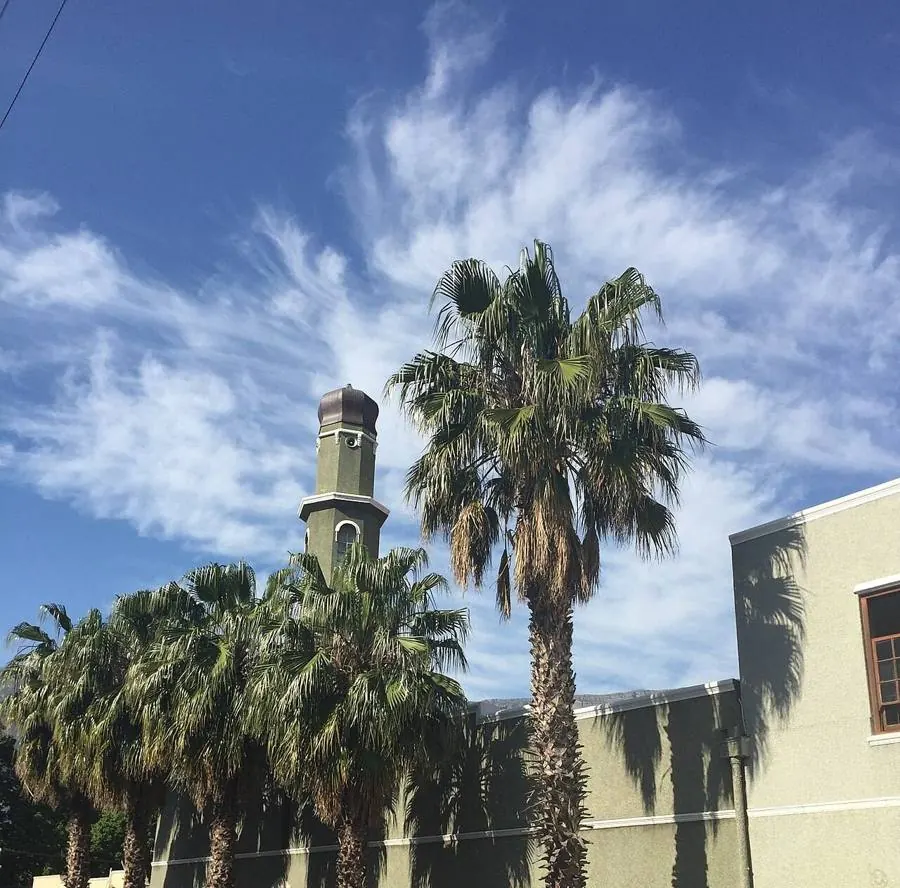

After his release, he taught. Within two years of his return to the town, Laffan writes, he was able to run a small school from his own home. By about 1793 a school met in his home on Dorp Street, Cape Town.
By 1794, an unofficial mosque was meeting on Dorp Street. Muslims at the Cape could not yet worship openly; formal religious freedom came in 1804. Today’s Auwal Masjid is regarded as South Africa’s first mosque.
His biographer Shafiq Morton gives 1807 as the year of his death, and Laffan records that his congregation was led by Achmat van Bengal from 1807. The school and the congregation he began went on without him.
Lo! We, even We, reveal the Reminder, and lo! We verily are its Guardian.
After his imprisonment, he taught the next generation. The community still remembers what he passed on. Allah has promised to guard His Book, and often He guards it through people who keep it in their hearts and teach it to children. We cannot tell you exactly how or where that muṣḥaf was written; historians are still asking. We can tell you that his school helped pass Qur’anic learning to another generation in Cape Town.
Sources
Every fact in this story comes from these. Where they disagree, the story says so.
- Laffan, Michael. “From Javanese Court to African Grave: How Noriman Became Tuan Skapie, 1717–1806.” Journal of Indian Ocean World Studies 1 (2017): 38–59. Read the article ↗︎ (opens another site)
- Morton, Shafiq. From the Spice Islands to Cape Town: The Life and Times of Tuan Guru. Cape Town: National Awqaf Foundation of South Africa, 2018.
- Willemse, Hein. Review of From the Spice Islands to Cape Town, by Shafiq Morton. Tydskrif vir Letterkunde 57, no. 1 (2020). Read the review ↗︎ (opens another site)
- BBC News. “How Cape Town Muslims saved South Africa’s oldest Quran.” 2023. BBC News ↗︎ (opens another site)
- South African History Online. “Auwal Masjid, Cape Town.” SAHO ↗︎ (opens another site)
- Parliament of South Africa. “Leader of Al Jama-ah party in Parliament takes oath of office on Quran 1794 Tuan Guru.” 22 May 2019. Parliament of South Africa ↗︎ (opens another site)
- South African History Online. “Sheikh Yusuf, regarded as the founder of the Islamic faith at the Cape, dies at Zandvliet, Macassar.” SAHO ↗︎ (opens another site)
- Pickthall, Marmaduke. The Meaning of the Glorious Koran. 1930. Al-Ḥijr 15:9, as given by the Quranic Arabic Corpus ↗︎ (opens another site)
Image credits
- Robben Island, offshore from Blouberg (top). Photo: M J Hurter, CC0 ↗︎ (opens another site), via Wikimedia Commons ↗︎ (opens another site).
- Chart of Table Bay and Robben Island, c. 1663–64. Nationaal Archief / Atlas of Mutual Heritage. Public domain, via Wikimedia Commons ↗︎ (opens another site).
- The Auwal Masjid, Bo-Kaap. Photo: LiebeB, CC BY-SA 4.0 ↗︎ (opens another site), via Wikimedia Commons ↗︎ (opens another site), cropped to the minaret, palms and wall. Our cropped version is shared under the same license.
Start reading
Carry it yourself. Start from the first letter.
The Qāʿidah course on this site begins at the first Arabic letter and assumes nothing. It is free, with no account.
More from Carried
Two more stories of the Qur’an, carried.
Written on wood, then washed away
How Qur’an learners in parts of West Africa learn from wooden boards, as one anthropologist saw it done in Djenné, Mali.
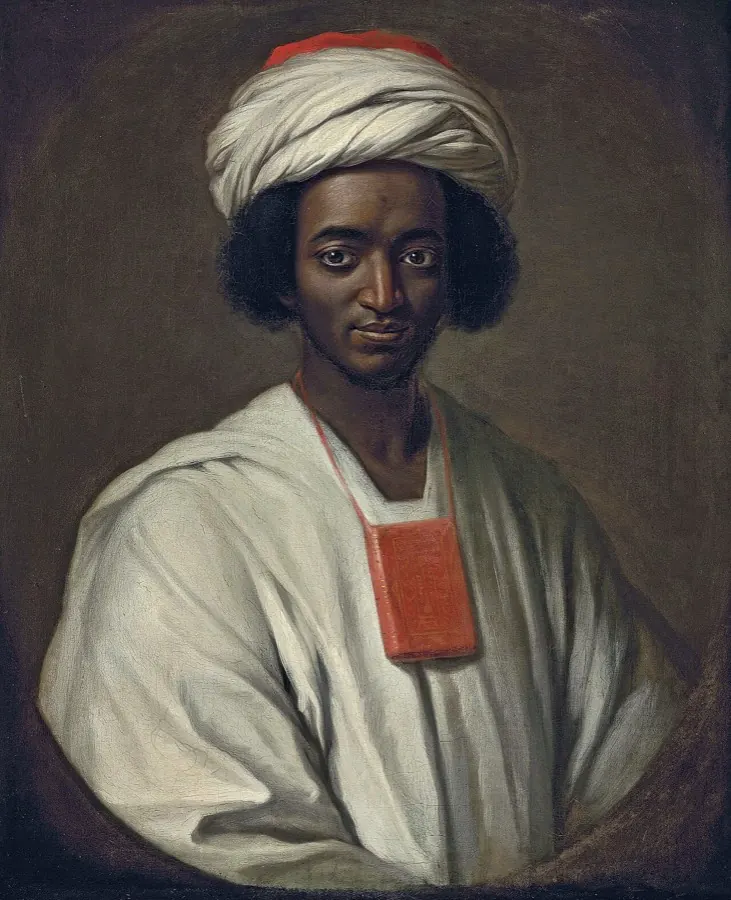
Ayuba Suleiman Diallo
Captured in West Africa, enslaved in Maryland, freed in England, where Thomas Bluett says he wrote out the Qur’an from memory.