Part 1 · The mouth · Lesson 2 of 16
Seventeen points, five zones
The full map of articulation, behind the five zones you already know.
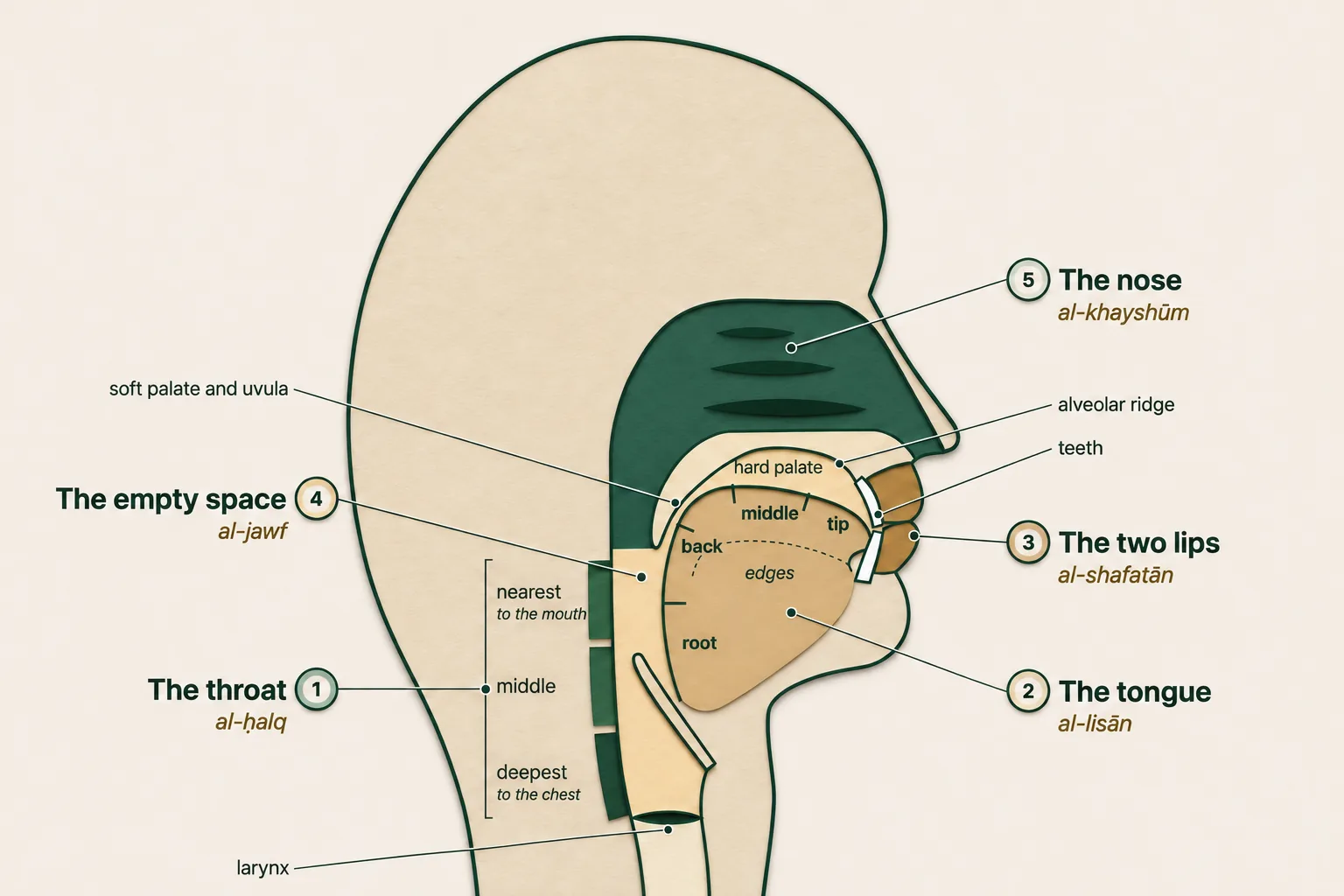
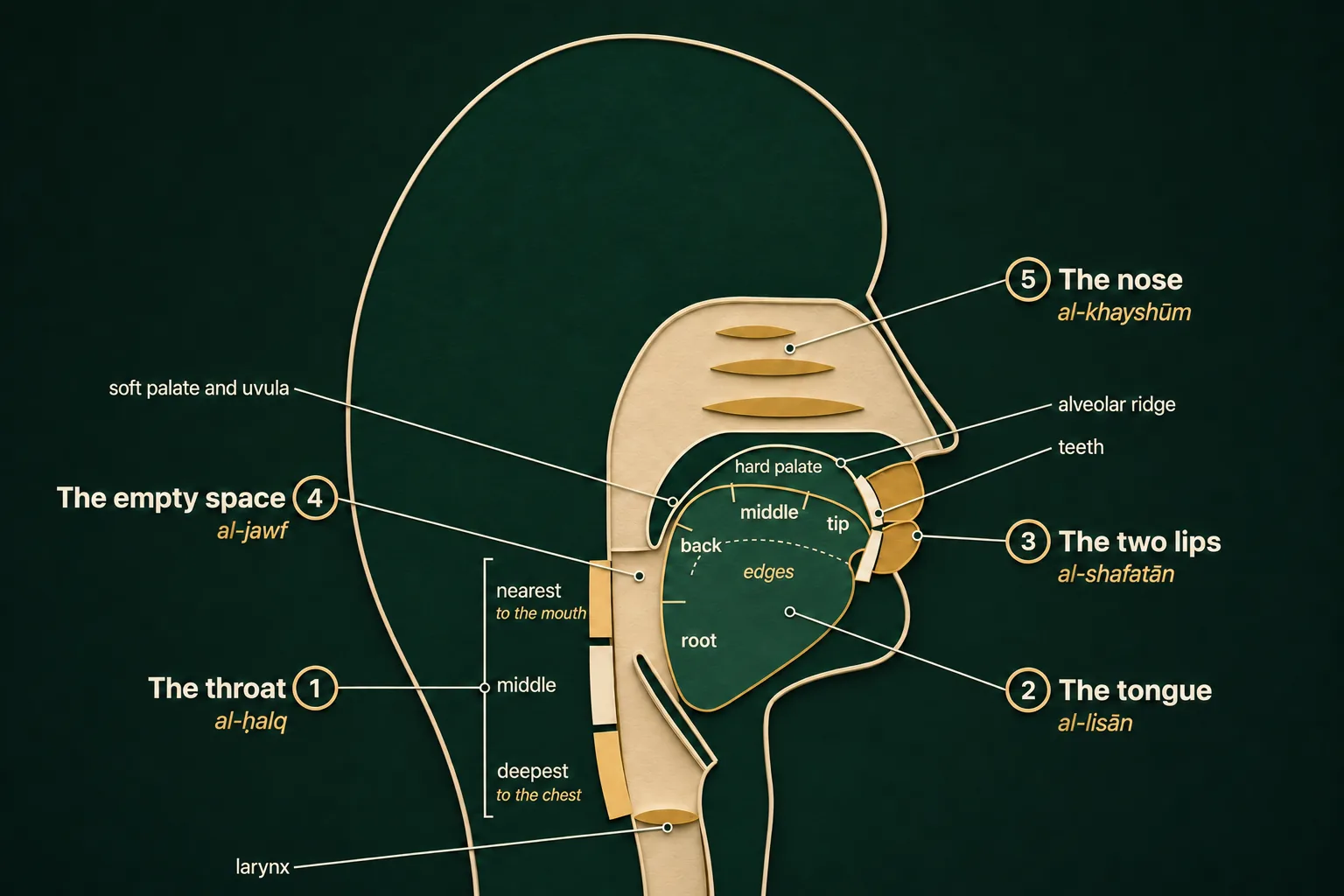
The rule
The first book gave you five zones and said you did not need the seventeen points to begin. You have begun. Nothing here is a new sound — what is new is being able to say where, because a letter you can locate is a letter you can fix. A letter you know only by ear drifts, and you will not hear it drift.
The five zones and their letters
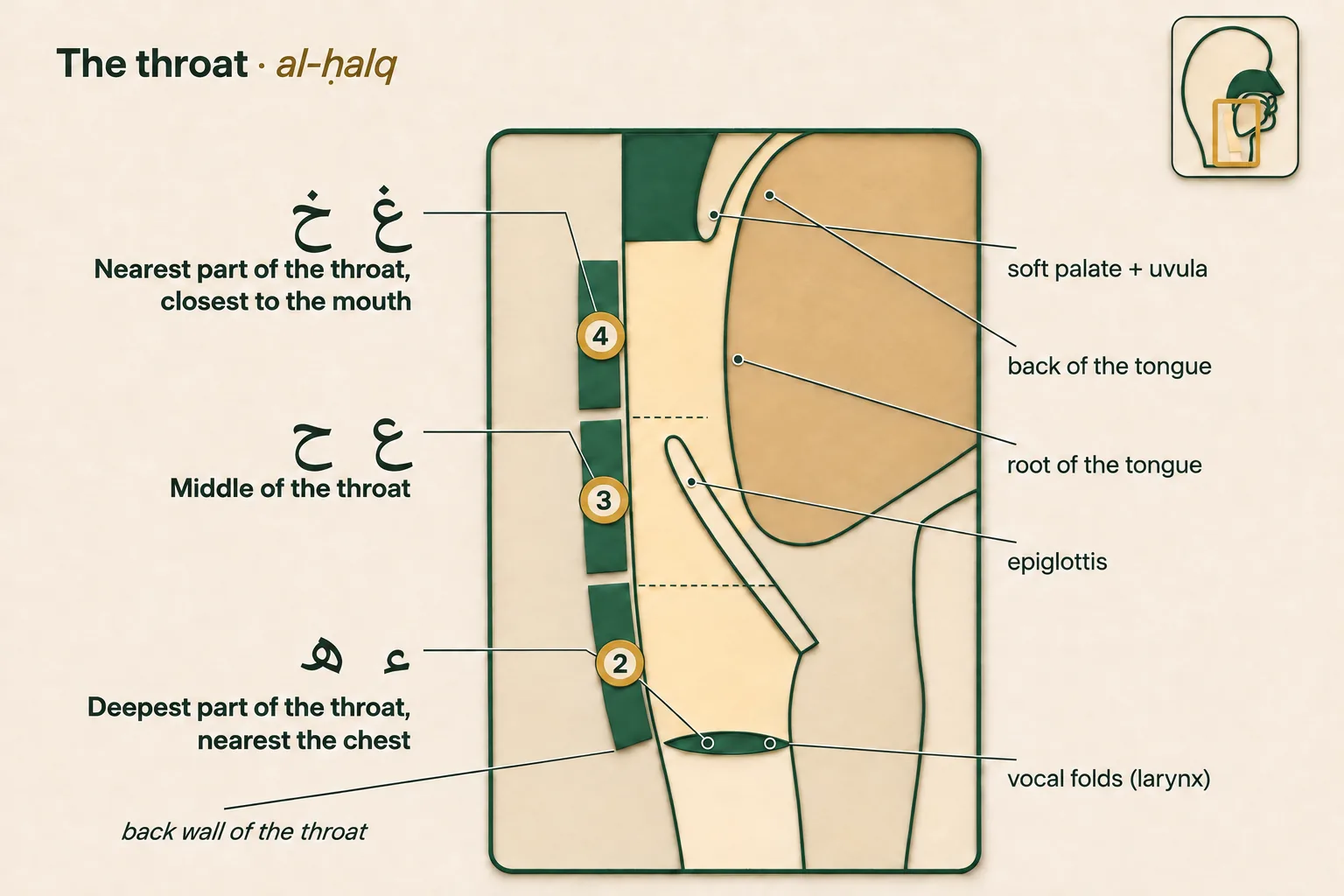
The throat
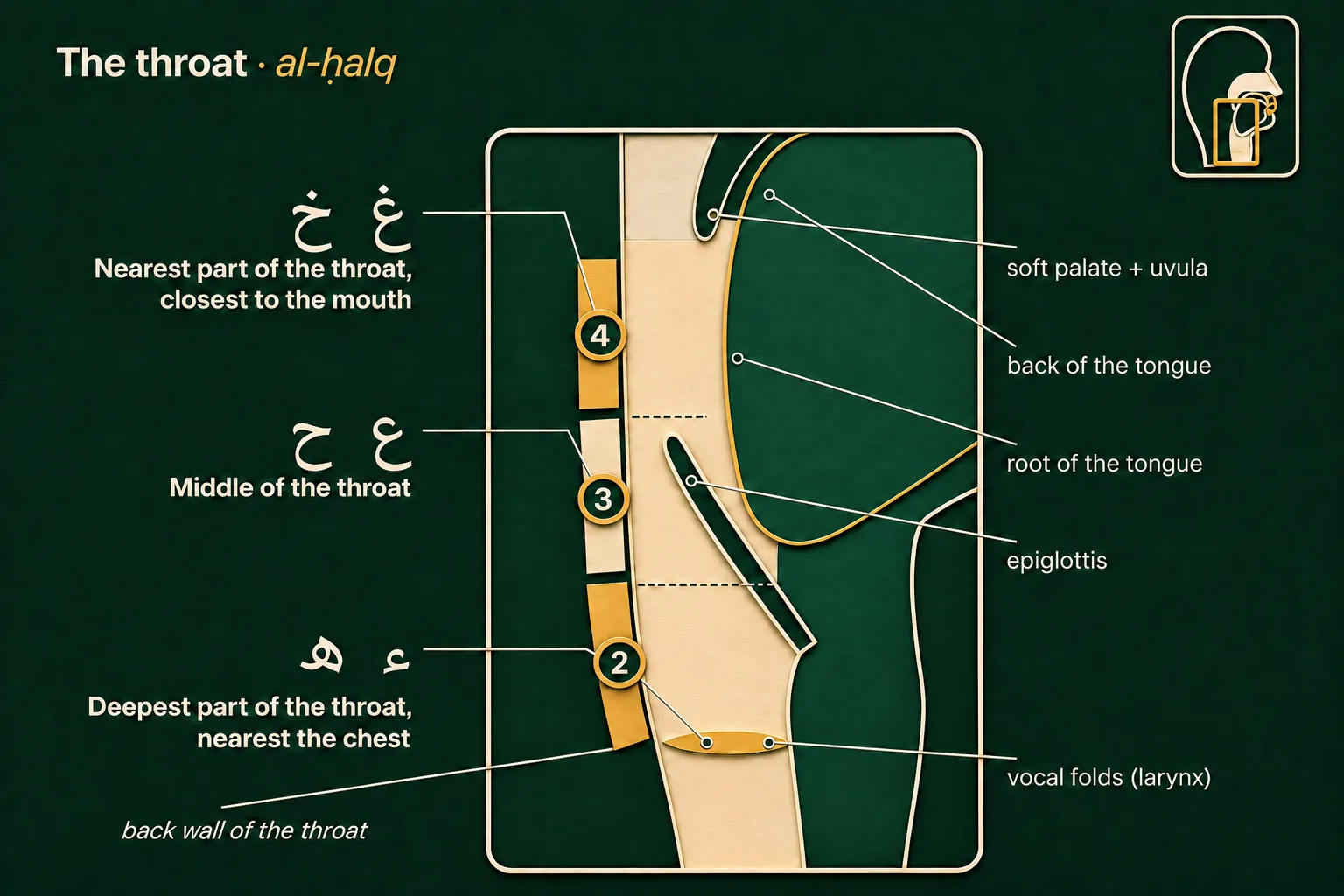
ء هع حغ خThree depths, six letters. At each depth one letter is voiced and one is not — so if you can make one of a pair and not the other, you are in the right place and doing the wrong thing with your voice.
The throat: points 2–4 The tongue
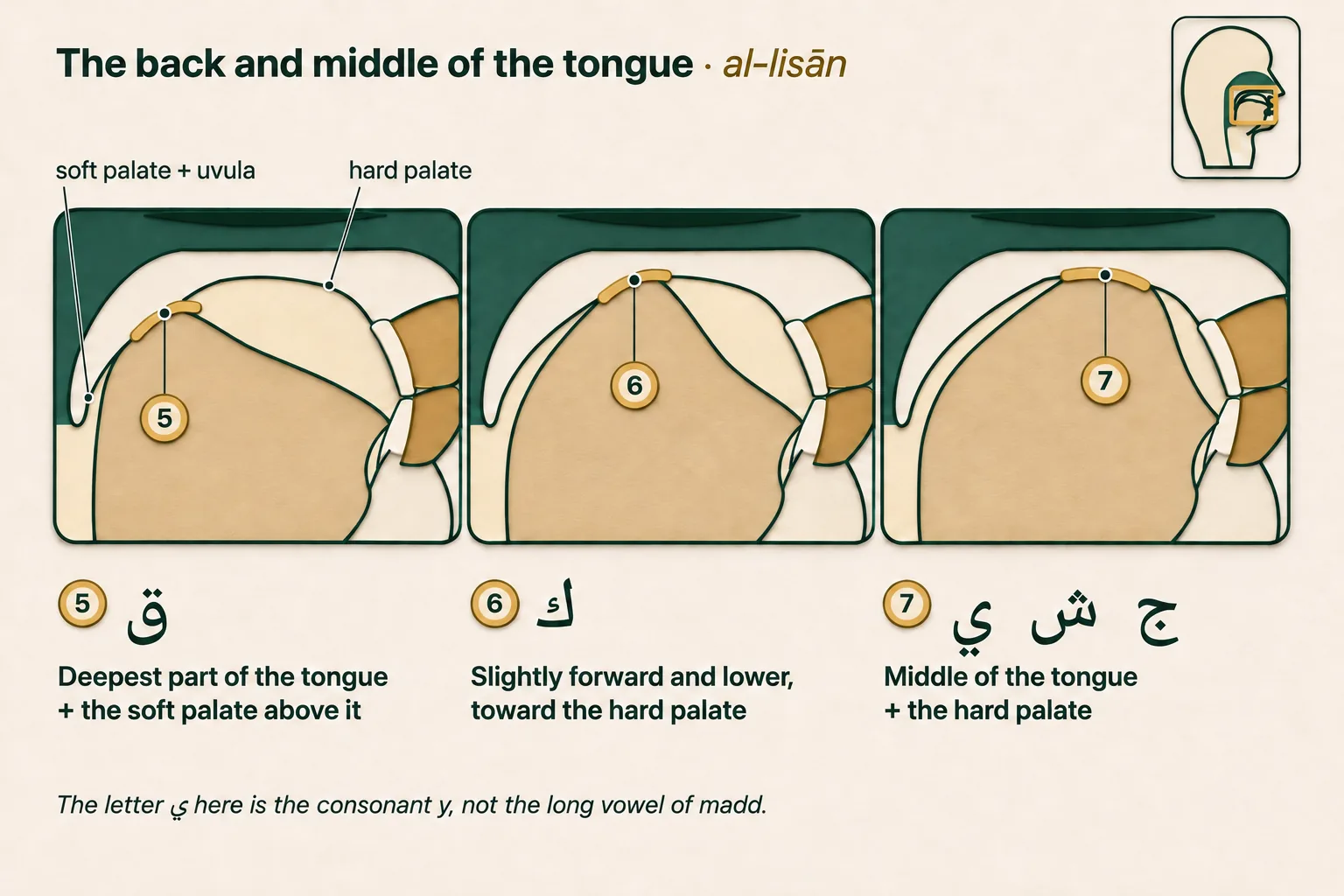
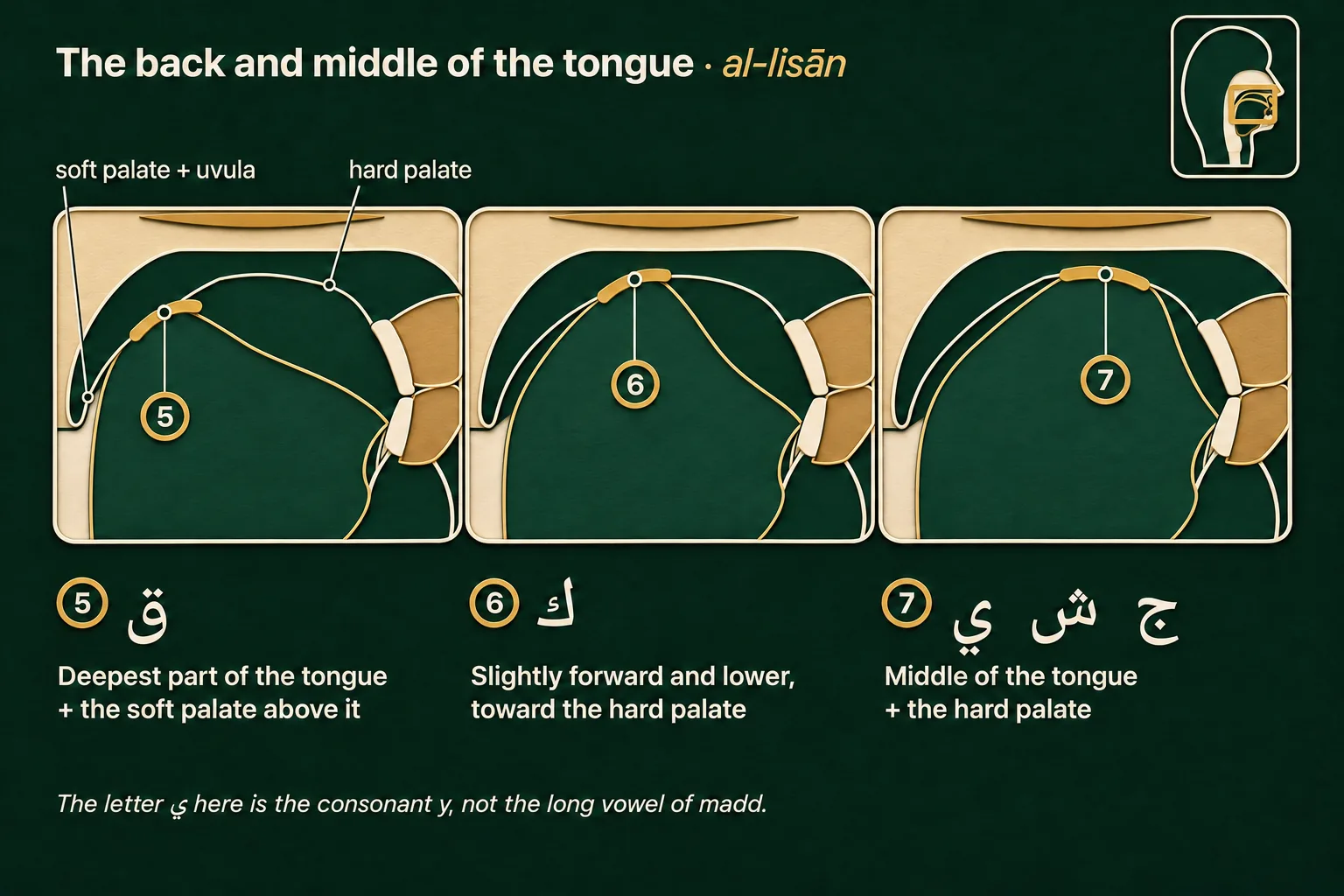
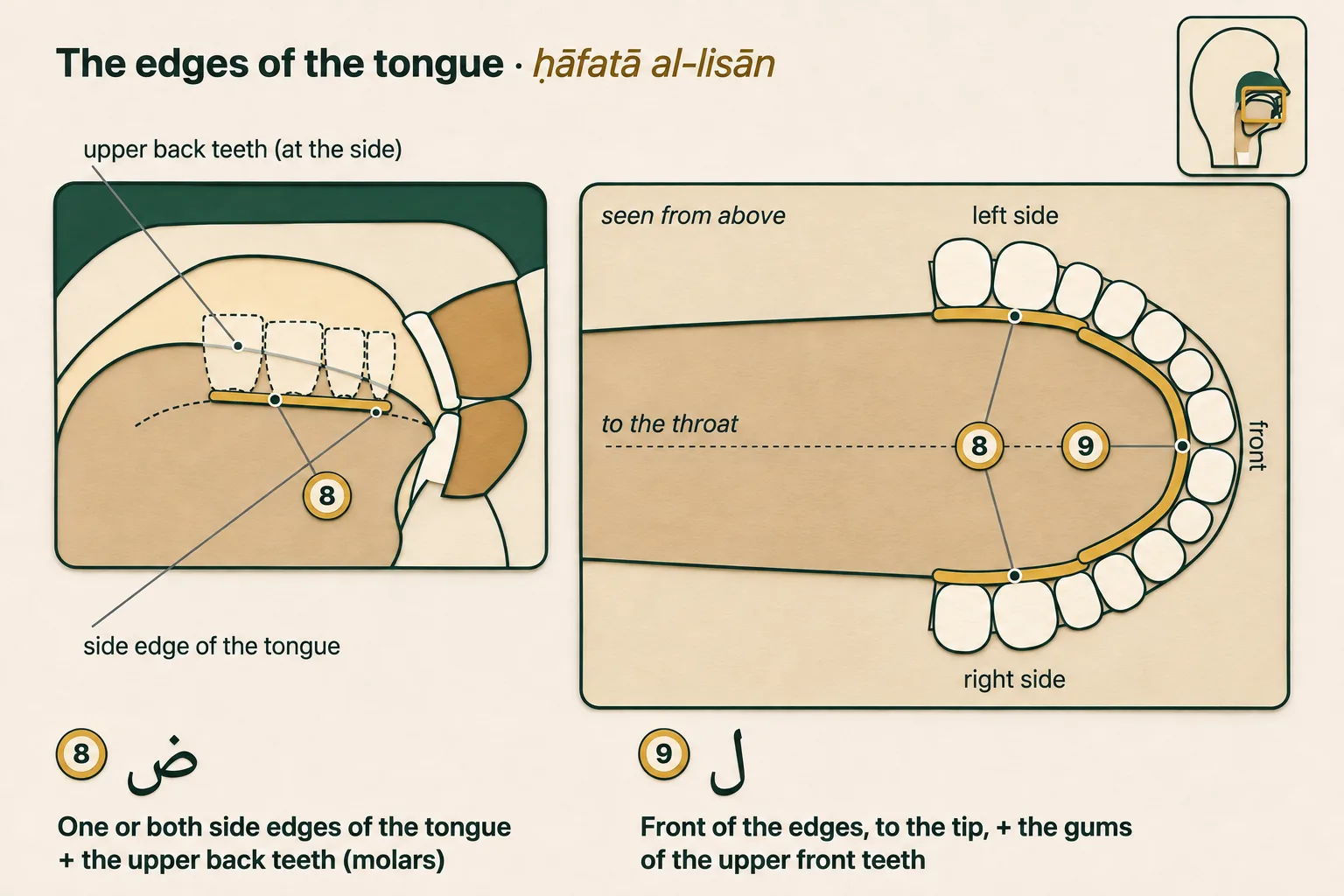
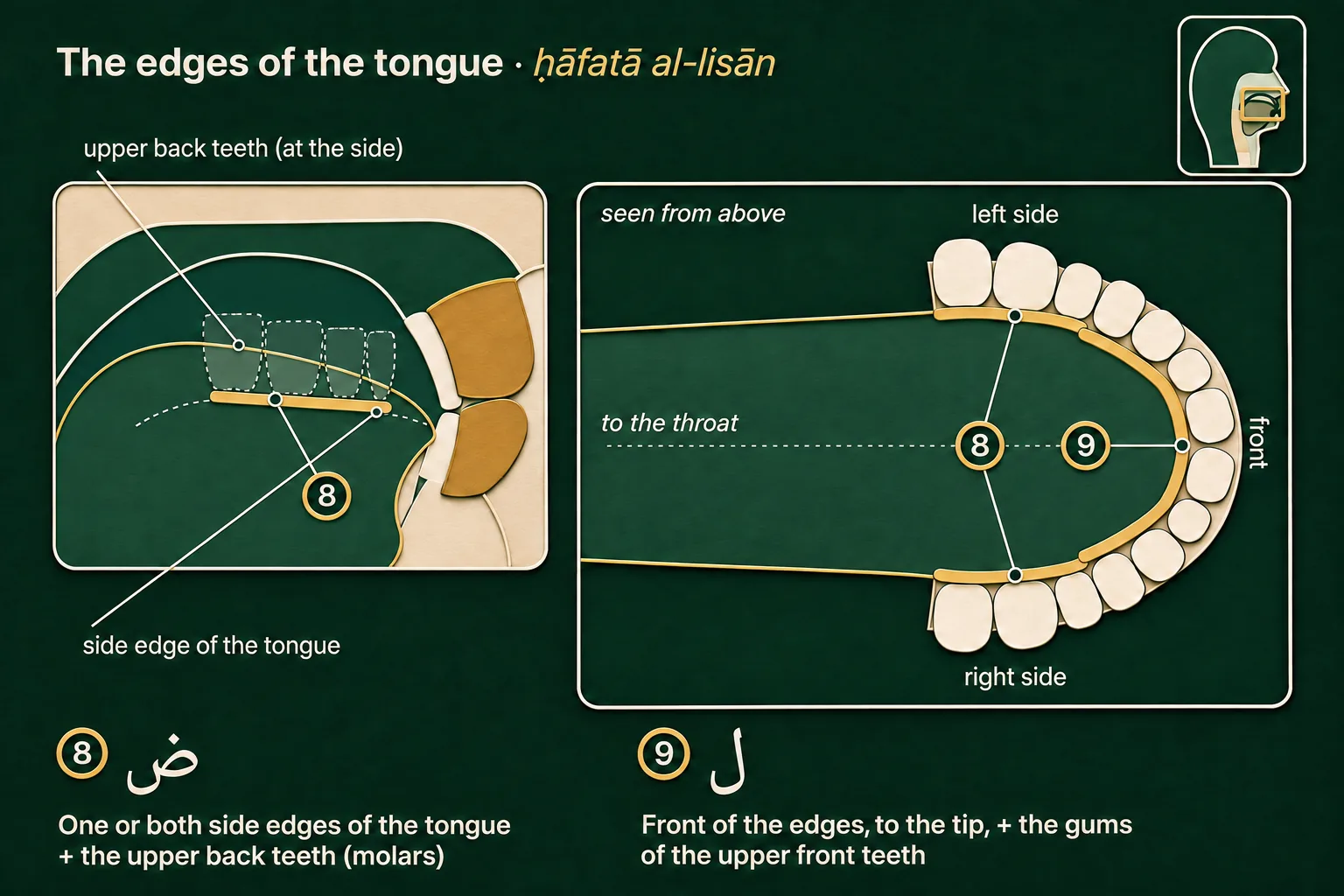
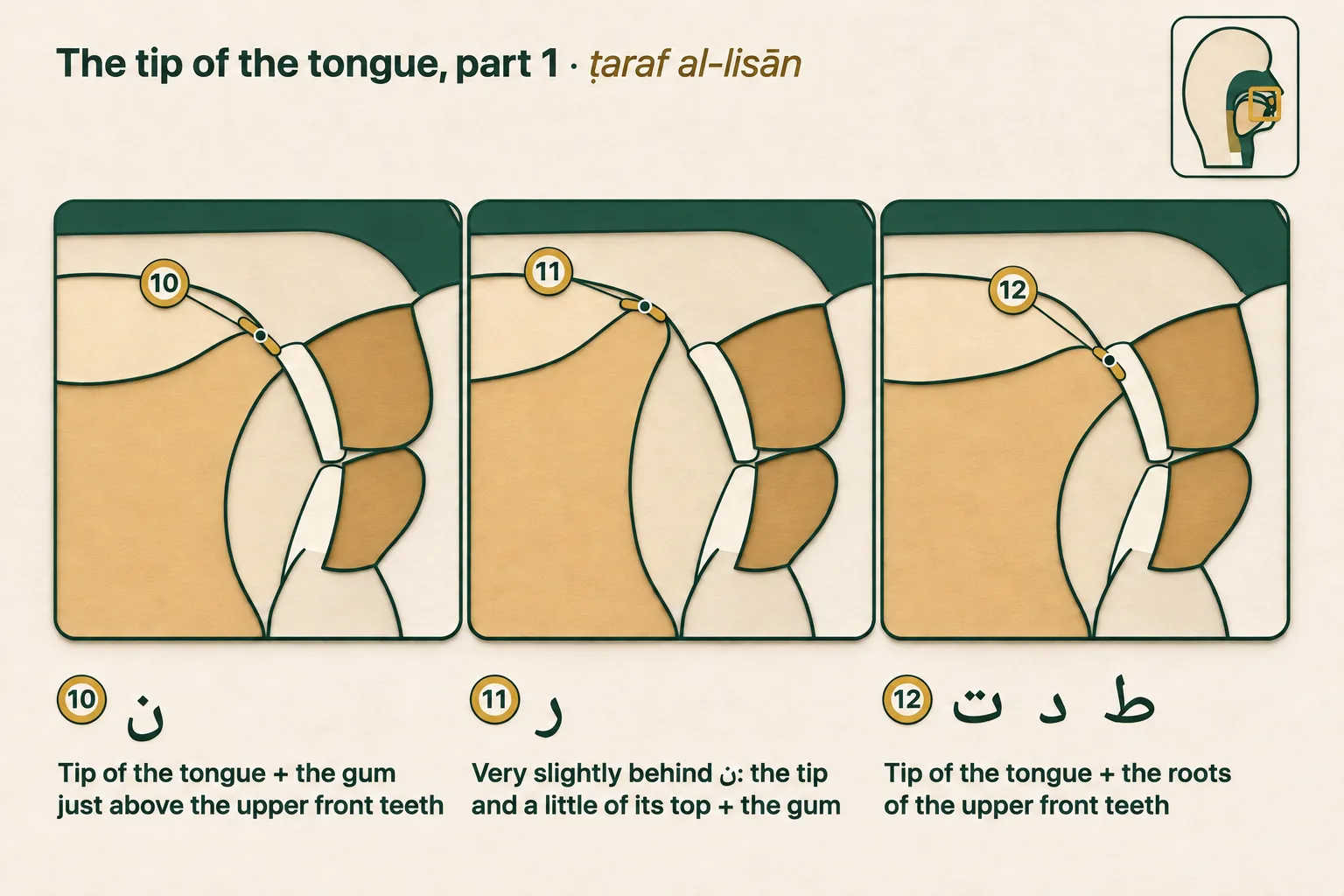
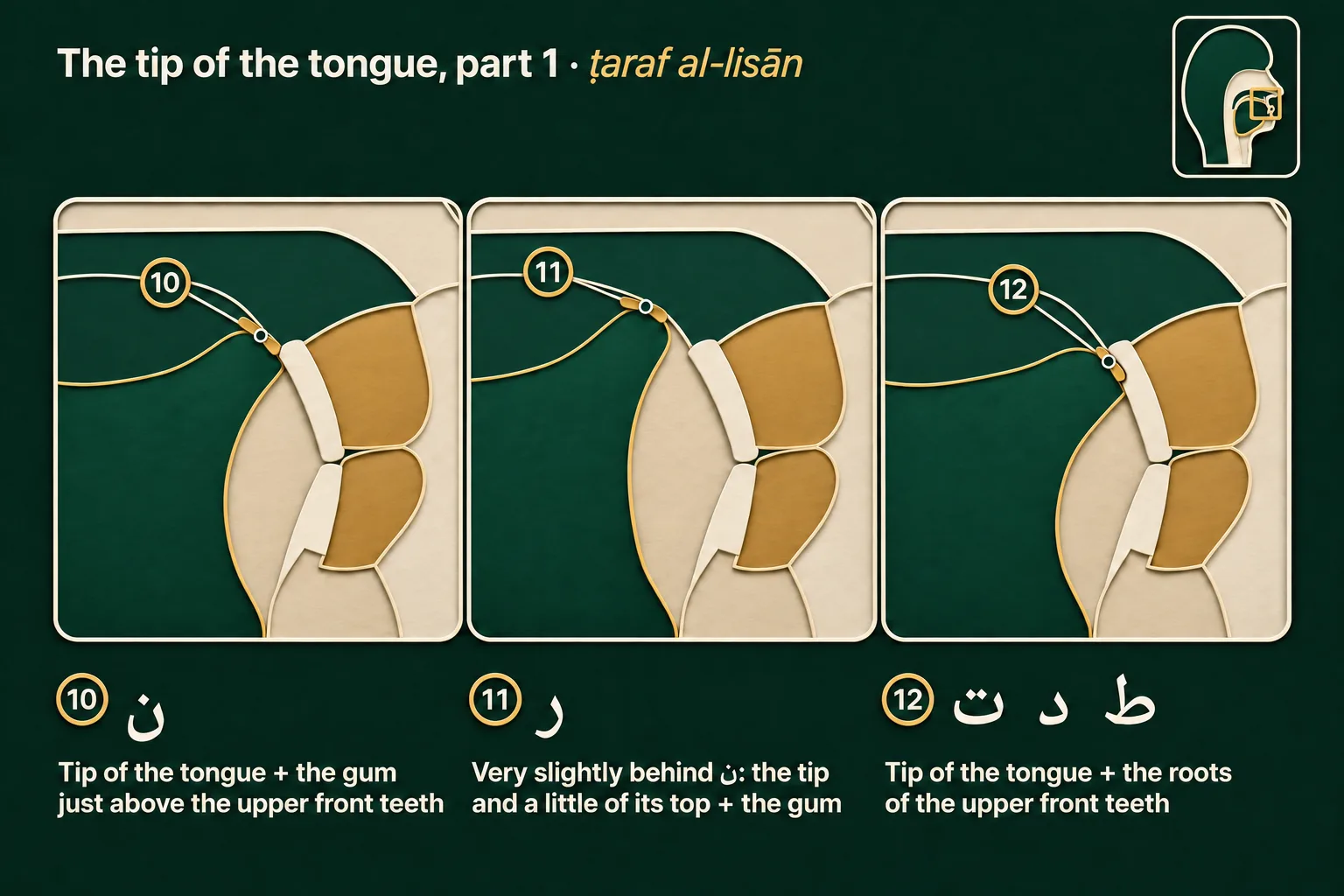
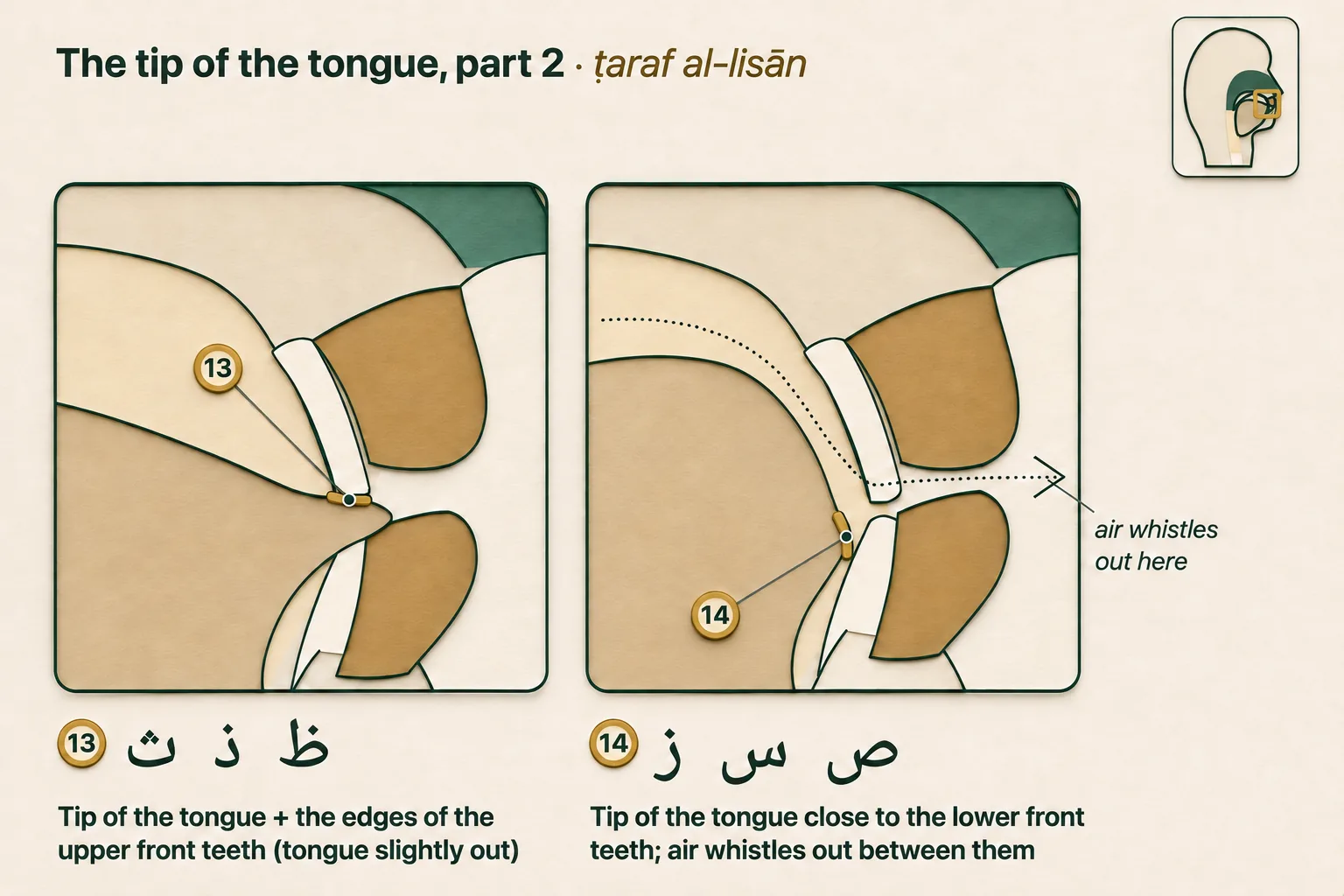
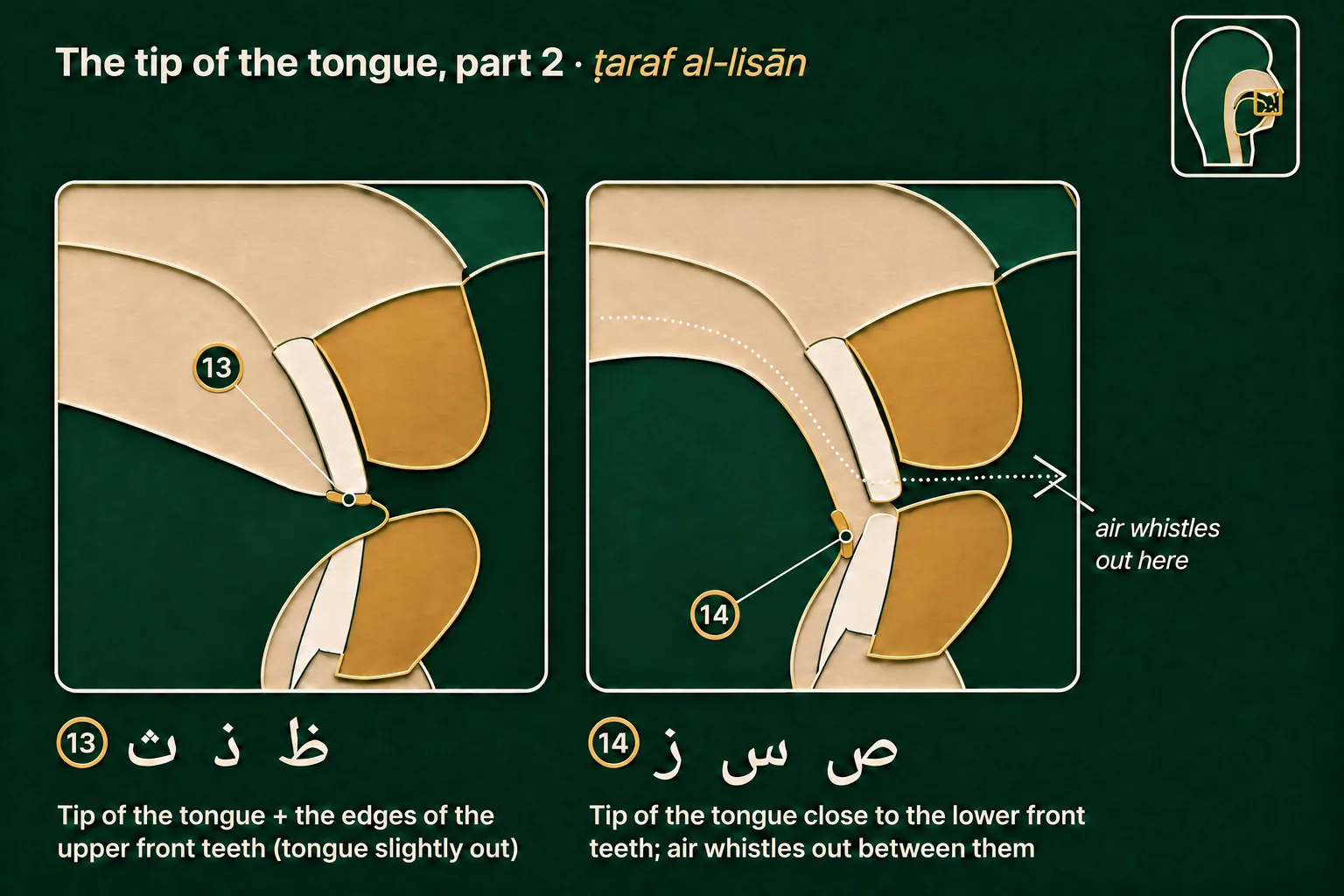
ق كج ش يضل ن رط د تص ز سظ ذ ثTen points and eighteen letters. That ق and ك sit at two different depths is why a qāf read as a kāf is not a small error — they are two points apart.
The back and middle of the tongue: points 5–7 The edges of the tongue: points 8–9 The tip of the tongue, part 1: points 10–12 The tip of the tongue, part 2: points 13–14 The two lips
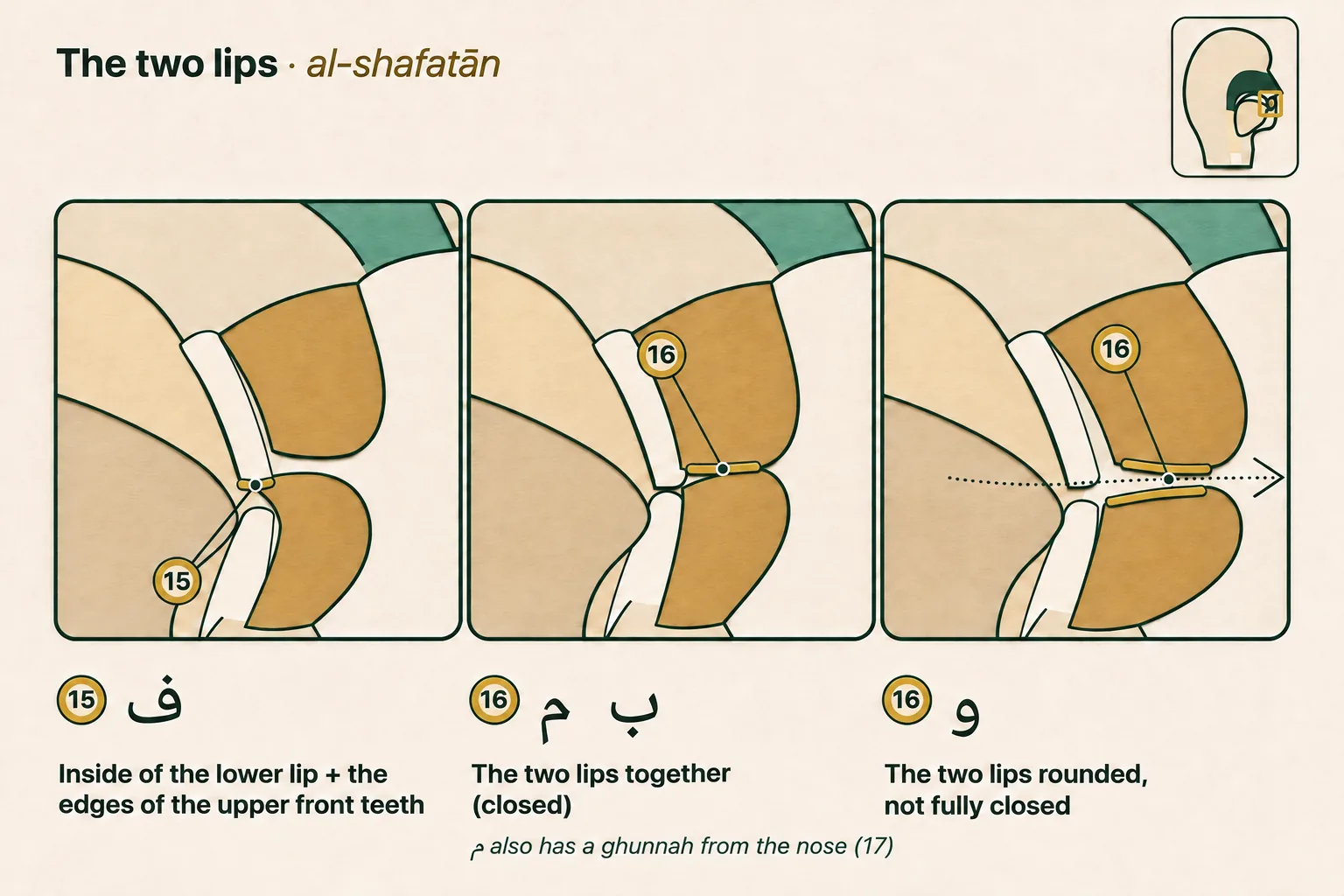
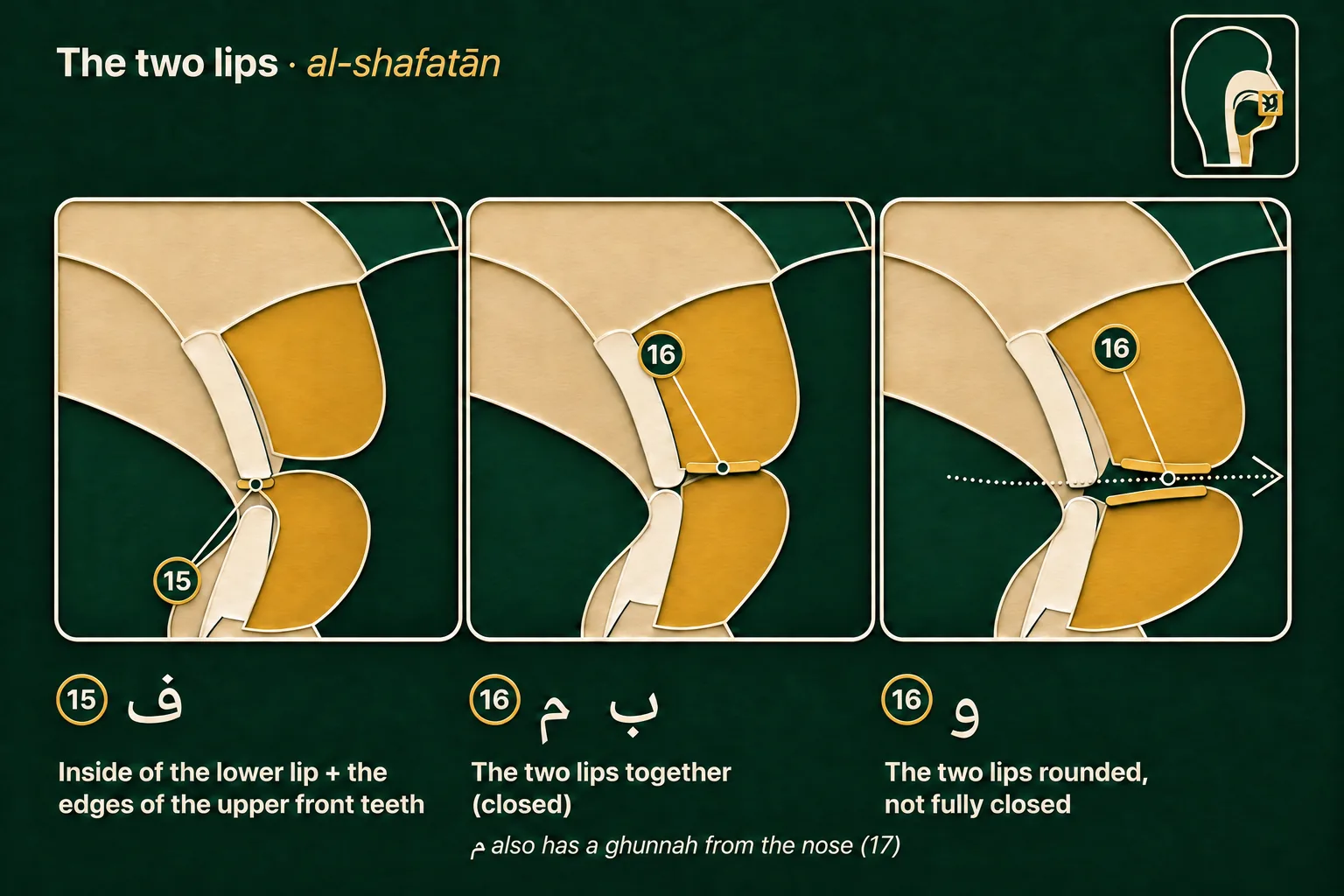
فو ب مف is the inside of the lower lip against the upper teeth. The others are lip against lip, but not alike: ب closes hard, م sends the sound through the nose, و rounds without letting them touch.
The two lips: points 15–16 The empty space
ا و يNo contact anywhere — the open cavity, where the three lengthening letters live. It is the only zone with nothing to release, which is exactly why a madd can be held.
The nose
The ghunnah. Lesson five is about nothing else.
5-question check
Spot the rule
A short self-check, using only the book’s examples. Choose an answer to see why. Nothing is saved or sent.
Question 1 of 5
Which zone is this letter made in?
ع- The throat
- The tongue
- The two lips
- The empty space
Show the answer
Answer: The throat. ع is made in the throat.
Question 2 of 5
Which zone is this letter made in?
ق- The throat
- The tongue
- The two lips
- The empty space
Show the answer
Answer: The tongue. ق is made with the tongue.
Question 3 of 5
Which zone is this letter made in?
ف- The throat
- The tongue
- The two lips
- The empty space
Show the answer
Answer: The two lips. ف is made at the two lips.
Question 4 of 5
Which zone is this letter made in?
ض- The throat
- The tongue
- The two lips
- The empty space
Show the answer
Answer: The tongue. ض is made with the tongue.
Question 5 of 5
Which zone is this letter made in?
م- The throat
- The tongue
- The two lips
- The empty space
Show the answer
Answer: The two lips. م is made at the two lips.
Lesson 2
The gate
The book ends every lesson with a gate. Move on when this is true of you:
You place every one of the twenty-eight at its point, and the three throat pairs are distinct enough that a listener can tell which of each you said.
Each gate has two halves: you must make the sound, and you must hear it when it is missing. Ask someone who reads well to listen to you.
Ticking it marks the lesson done in this browser only. Nothing is sent anywhere.
Lesson 2 is done. On to the next one when you are ready.
Next: lesson 3 · Heavy and lightThis course is free, with no ads. Monthly supporters help keep it that way. Support from $10 a month
Help shape this lesson
How was this lesson?
One tap. It goes straight to Hamza, and it is how the next version of this lesson gets better.
Received. Jazāk Allāhu khayran. Hamza reads every one.
Anonymous: no name, no account. How feedback is handled
From Tajwīd for Juz ʿAmma, lesson 2 — the free book by Hamza Abdul-Tawwaab. Āyāt from the Uthmani text the book uses.
Qur’anic text: Tanzil Quran Text (Uthmani), via alquran.cloud. Marks are normalized for display (the sukūn and staggered tanwīn as the muṣḥaf prints them); the letters are unchanged.